DIY Stimulating Cat Toys: Safe, Quick Ideas at Home
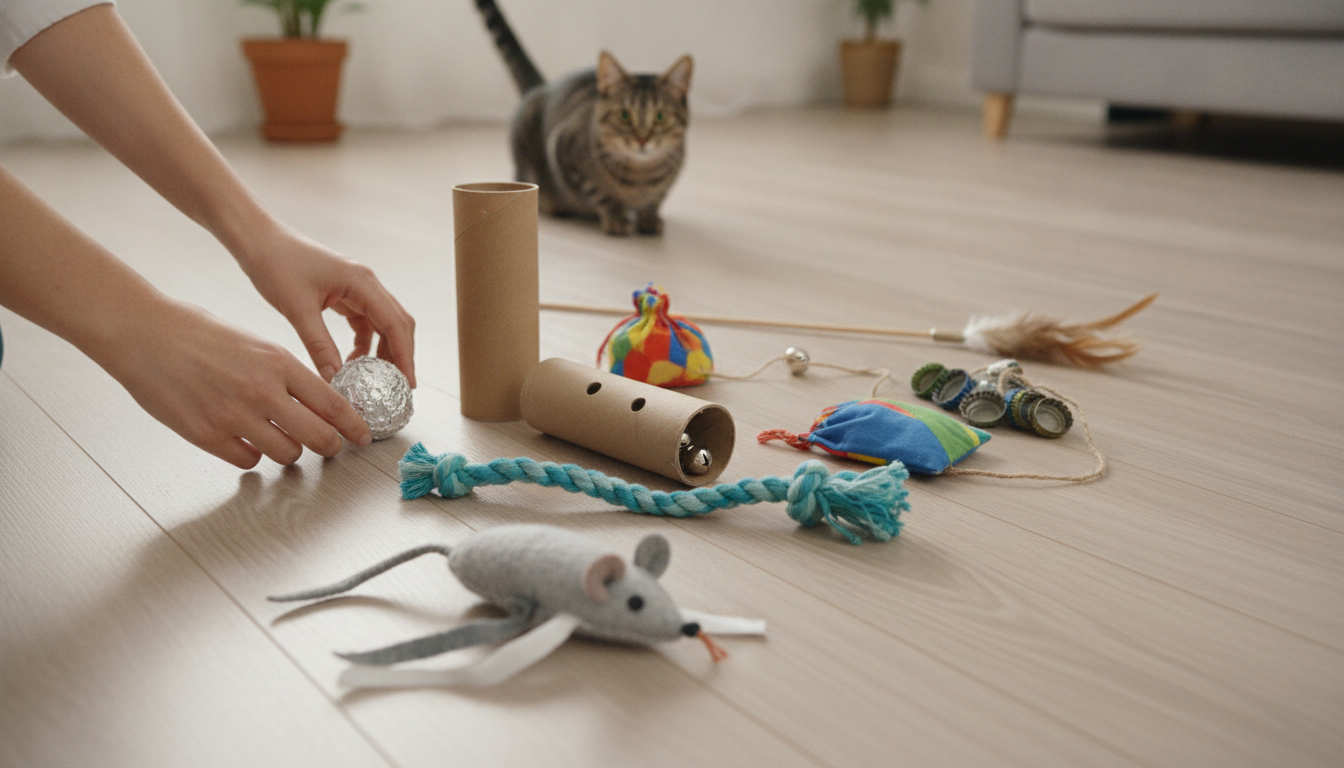
How do you make homemade stimulating toys for cats?
Homemade stimulating cat toys don’t need fancy materials—they need movement, variety, and safe textures that encourage chasing, pouncing, batting, and sniffing. The best DIY options are quick to assemble, easy to rotate, and sturdy enough to handle claws without creating choking hazards.
1) Sock “kicker” toy (for bunny-kicking)
Fill a clean sock with crumpled paper, fabric scraps, or a small amount of polyester stuffing, then add a pinch of dried catnip or silvervine (optional). Tie a tight knot at the open end or sew it shut. Keep it long and slightly firm so your cat can grab it with front paws and kick with back legs.
2) Crinkle paper prey (for hunting sounds)
Wrap a crumpled piece of brown paper or tissue paper into a loose ball and tape the edges down so it won’t unravel. Drop it on a hard floor and flick it with your finger to mimic prey movement. Supervise at first and discard if it tears into small pieces.
3) Toilet paper roll puzzle (for foraging)
Fold one end of an empty cardboard roll inward to close it. Add a few pieces of dry kibble or treats, then fold the other end closed. Poke 2–4 small holes along the tube so scent escapes. Your cat will bat it around and work to get the food out.
4) String-free wand alternative (for safer chasing)
Skip loose string and use a short strip of fleece tied tightly to a sturdy stick (like a dowel). Keep the “tail” short enough that it can’t wrap around your cat. Always put wand toys away after play so your cat can’t chew unattended parts.
Safety checks before play
Avoid yarn, rubber bands, and small plastic pieces that can be swallowed. Choose materials that don’t splinter, remove staples or sharp tape edges, and retire toys once they fray. If your cat is an aggressive chewer, stick to larger, tightly secured fabric toys.
For more step-by-step ideas and variations, see the full guide here: How do you make homemade stimulating toys for cats?
FAQ
How often should I rotate my cat’s toys?
Rotate every 3–7 days by putting most toys away and leaving out a small “menu” of different types. Rotation keeps familiar toys feeling new and helps prevent boredom.











Leave a comment